
Faculty of Allied Health Sciences, University of Jaffna is pleased to hold the 2nd International Research Conference on Healthy Delights (Arokiyam)- 2024 (ICHD-2024) on 12th of November ICHD is one of the satellite conferences of JUICe and it is aimed to provide an open forum for local and international researchers from diverse disciplines to disseminate their research findings. It is the best platform for researchers in the allied health science field to share ideas and research experiences. 1st ICHD was successfully held in August 2022, which included several research findings worldwide. As the organizing committee of ICHD-2024, we are determined to organize the conference to a higher standard, by bringing well-known international and national researchers as keynote speakers, who would address the health-related issues, the world is currently facing. We are pleased to invite researchers from all around the world.
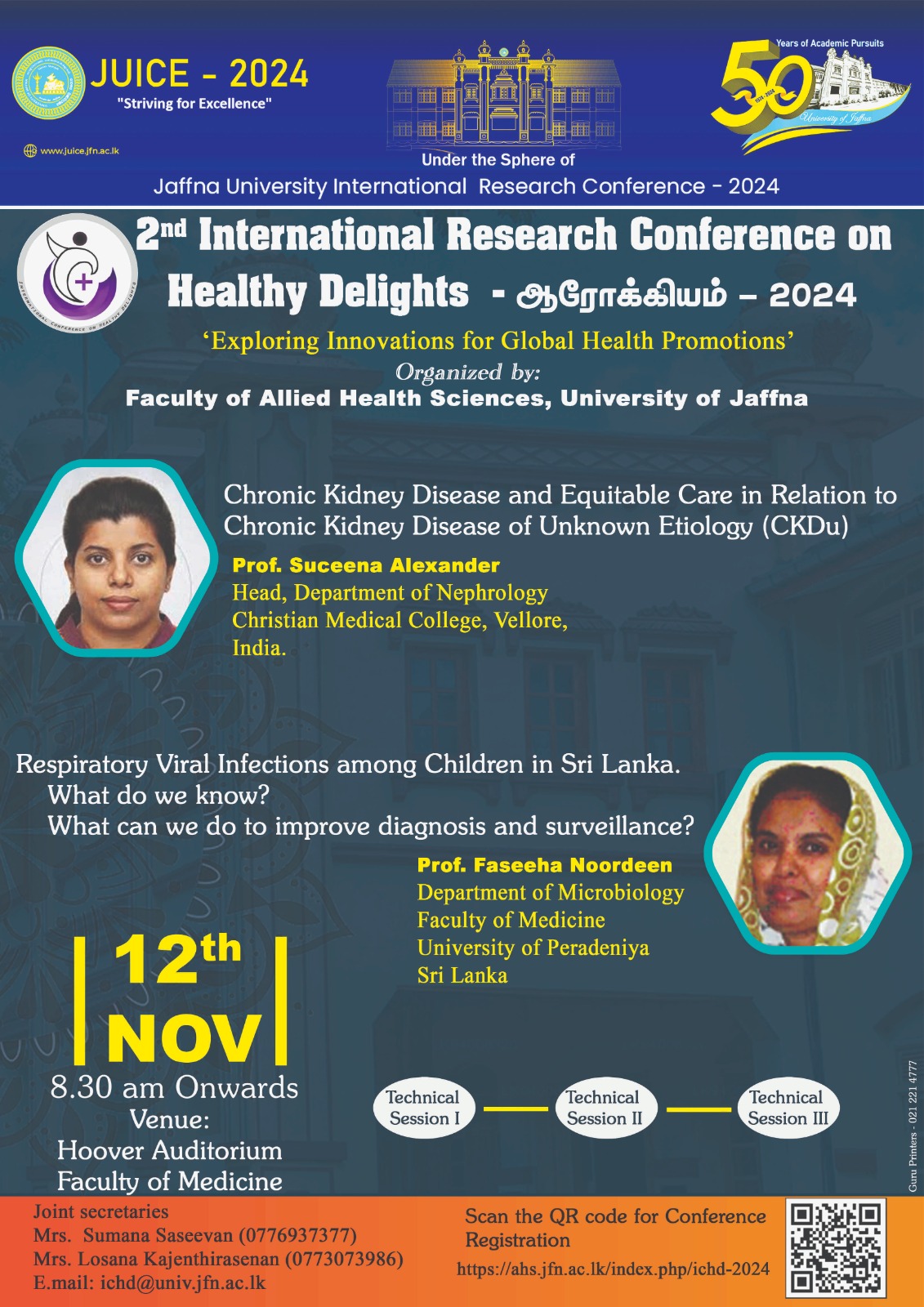
The 2nd International Conference on Healthy Delights – ஆரோக்கியம் – 2024 of Faculty of Allied Health Sciences, University of Jaffna with its special theme on “Exploring Innovations for Global Health Promotions”.
This conference provides a platform for allied health professionals and students to present their findings and be able to receive insightful feedback to improve their work. The abstracts submitted to the conference were subjected to a review process in-order to ensure the quality of the abstracts. First-line screening of abstracts was carried out by editors to check whether each abstract was compiled with the author’s guidelines. Then each paper was reviewed with a double-blind review process by two reviewers who are in the relevant field.
Totally 24 abstracts were accepted for this conference after this rigorous review process. The papers were received in the fields of Nursing, Medical Laboratory Sciences, Pharmacy, Education, Physical education, and other health related areas. The conference was conducted for one day with two keynote speeches, two planetary speeches, and 24 oral paper presentations. All papers are presented in four technical tracks. I would like to express my deepest appreciation to all the authors for submitting their abstracts to this forum. Also, I thank all the Reviewers for their invaluable input on the peer-reviewed process. I wish to say my gratitude to all the keynote speakers and Plenary speakers who gave up their precious time to deliver the distinguished talks I sincerely acknowledge my colleague Mrs. P. Sathya (BPharm, MPhil) who is the Associate Editor of this conference who provided immense support in various aspects on preparing this conference proceedings.
 Mrs. L. Kamalarupan
Chief Editor, ICHD-2024,
Faculty of Allied Health Sciences,
University of Jaffna.
CKD of unknown etiology (CKDu) is a form of chronic kidney disease that is being increasingly recognized from isolated agrarian and rural locations especially across the tropical and sub-tropical countries like Nicaragua, El Salvador, Costa Rica, Sri Lanka, India, Egypt, and Tunisia. More hotspots are being identified worldwide. The disease predominantly affects young males, in occupations that expose them to environmental heat and toxins such as agriculture, open furnaces and manual labour. By definition, the disease is endemic among the underprivileged communities. The disease has a long asymptomatic phase which lends itself difficult to be identified at an early stage except by focused screening of blood and urine. People typically do not have diabetes or hypertension which are the traditional risk factors for chronic kidney disease.
The disease is progressive leading to end stage kidney disease over several years. Histologically, kidney tissue has varying degrees of tubular atrophy and interstitial fibrosis with inflammatory cells. This undermines the need for screening of at risk populations at a national level to uncover new but unrecognised hotspots and to gear equitable distribution of CKD resources. These should beavailable, acceptable and affordable to every region that is a CKDu hotspot. To conclude, screening and identification of these regions at a national level can help policy makers to allocate and prioritise resources equitably. It will also spearhead preventive measures and environmental change for a better future.
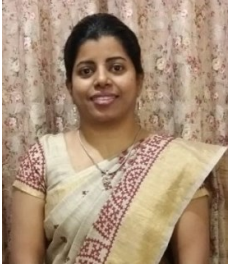
Prof. Suceena Alexander
Professor and HoU, Nephrology Unit III,
Department of Nephrology,
Christian Medical College, Vellore, Ranipet Campus India.
Respiratory viral infections in children in Sri Lanka – What do we know? What can we do to improve diagnosis and surveillance?
Acute respiratory tract infections (ARTIs) including pneumonia are a leading cause of morbidity and mortality in children worldwide. According to the World Health Organization (WHO), 150 million cases of pneumonia occur each year in children less than 5 years of age. Of these, 20 million cases require hospitalization causing 935000 deaths. It is estimated that viruses contribute to approximately 70% of childhood pneumonias. Viruses are the predominant causes of ARTIs in children, and human respiratory syncytial virus (hRSV), human parainfluenza viruses (hPIVs), human metapneumovirus (hMPV) and influenza viruses cause upper (URTIs) and lower respiratory tract infections (LRTIs) in infants and children. Of these, hRSV and hPIVs are the commonest cause of ARTI associated hospitalizations in children below 5 years of age. Overall, 3% to 18% of the hospitalizations occur due to ARTIs and majority of them are caused by hRSV, hPIVs and hMPV.
According to the Ministry of Health of Sri Lanka, pneumonia and LRTIs are one of the 10 principal causes of death in public hospitals with 9% mortality in children less than 5 years of age (13.9% in 2012). Sri Lanka is a tropical country and ARTIs occur throughout the year. Most respiratory viruses are underestimated as a cause of morbidity and mortality among children in Sri Lanka since physicians’ focus is mainly on influenza and COVID-19.
However, the available data indicates that respiratory viral infections contribute to a substantial disease burden. From a study conducted in Kegalle, from July to September 2011, in a total of 99 children tested, 32.3% had respiratory viral infections including hRSV and influenza. A large-scale study conducted from 2013 to 2014 in the North Central and the Central provinces of Sri Lanka reports a prevalence of 37.2% and 39.4% infections in children younger than 5 years of age. During the pandemic, in Sri Lanka as well as in other countries, SARS coronavirus-2 (SARS CoV-2) has also been shown to cause ARTI in children. On the other hand, seasonal corona viruses (CoV) also cause ARTI in children. In general, viral ARTI are associated with substantial socioeconomic consequences. The burden of viral ARTI in children has an impact on the growing economies, however, the actual burden is underestimated due to limitations in viral diagnostic and surveillance facilities in developing countries like Sri Lanka. Identifying viral causes of ARTI using optimal laboratory diagnosis and the pattern of distribution of viral ARTI in a location through surveillance will help implementing the earlypreventive measures to reduce the disease burden.
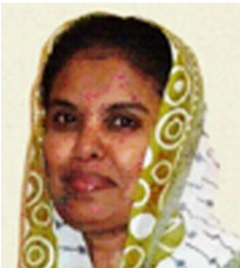
Prof. Faseeha Noordeen
Chair Professor of Microbiology,
Faculty of Medicine,
University of Peradeniya, Sri Lanka.
Participation of allied health professionals in improving the quality of life of elders in Sri Lanka through the CAPAGE project
The worldwide population is getting older. Sri Lanka is also one of the fastest-aging countries in South Asia. The elderly population (age 60 or more) in Sri Lanka is 12.4%. The elderly population in Jaffna is comparatively high, 14.1%. Ageing is associated with a general decline in physical and cognitive capacity and it is often accompanied by chronic diseases and increased hospitalization. Hence, aging still means more years of living in poor health. Population ageing affects nearly all aspects of society. This requires our collective efforts to achieve living with a healthy longer life. It is the responsibility of the health care team to promote healthy and active ageing of the elderly. Nurses are the one of the key players in a multidisciplinary team to contribute on healthy and active ageing.
The Faculty of Allied Health Sciences of the University of Jaffna realized the importance of working in this area to enhance the quality of life of elders through enhancing the professional competencies of nurses who are working with elders. Department of Nursing, Faculty of Allied Health Sciences of the University of Jaffna got an opportunity to work on this area from 15th January 2024 through a CAPAGE project which is co-funded by the European Union and is focused on enhancing the quality of life of elders of Sri Lanka. Under this Project, Sri Lankan partners from six universities and Health European Union Institutions working together to develop a sustainable innovation to enhance the quality of life of elders.
The major aim of the project is to enhance the professional competencies of health care providers; mainly nurses and physiotherapists who are working with the elderly. Key activities taking place in this project are: co-creating competence-based academic e-learning courses for nursing students in Healthy Ageing; Organizing workshops to train the Health care professionals, Introduce Geriatric course units in BSc Nursing curriculum in Sri Lankan universities; Establishing geriatric assessment laboratories; Establishing Active Aging Information Centers (AAIC), re-establishment of the existing potential in Health Care practice with elderly in Sri Lanka. This project will end up in three years duration in 2027. However, this initiated work will be continued and it will give a sustainable change in the quality of life of elders in Sri Lanka. This presentation is prepared based on the literature in CAPAGE Geriatric project. I acknowledge all the CAPAGE project members.
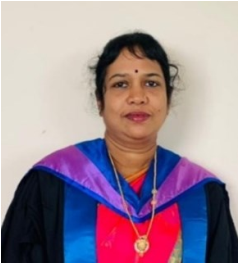 Ms Luxmi Kamalarupan
Senior Lecturer,
Department of Nursing,
Faculty of Allied Health Sciences,
University of Jaffna, Sri Lanka
Beyond conventional biopsies: The promise of salivary miRNAs in the diagnosis and prediction of oral cancer
Oral cancer (OC) is the sixteenth most prevalent cancer worldwide. More importantly, 10% of OC arises from oral potentially malignant disorders (OPMD). Despite the high incidence, there are no biomarkers for the early detection of OC, and patients are often diagnosed at their advanced stages (5-year overall survival ~ 50%). This study aimed to discover, develop and validate novel saliva-based microRNA signatures to diagnose OC and predict the risk or presence of OC in OPMD patients. Eight miRNAs (miR-7-5p, miR-10b-5p, miR-182-5p, miR-215-5p, miR-431-5p, miR-486-3p, miR-3614-5p, miR-4707-3p) were discovered when considering The Cancer Genome Atlas (TCGA) miRNA sequencing data and small RNA sequencing of saliva samples (OC: n=12, and controls: n=8). Expression levels of miRNAs were validated in saliva samples of OC (n=50), OPMD (n=52) and controls (n=60) using quantitative real-time PCR. Further validation was performed in OC tissue (n = 6) and normal oral cavity tissue samples (n=5). We have developed miRNA signatures for the early detection of OC and discrimination of OC from OPMD patients.
The discriminative efficiency of our eight-miRNA signature between OC and controls was Area Under Curve (AUC): 0.954, sensitivity: 86%, specificity: 90%, positive predictive value (PPV) of 87.8%, and negative predictive value (NPV) of 88.5% whereas between OC and OPMD was AUC: 0.911, sensitivity: 90%, specificity: 82.7%, PPV of 74.2% and NPV of 89.6%. More importantly, we have developed a risk probability score to predict the presence of OC or malignant transformation in OPMD patients. Our results highlight that the salivary miRNAs can be used as biomarkers to diagnose OC and predict OC risk in OPMD patients early. More importantly, the risk probability score provides promising results in predicting the presence or likelihood of developing OC in OPMD patients. Further validation is essential to support clinical integration, but these results underscore the transformative potential of saliva-based diagnostics in OC care.
 Mr Jaikrishna Balakittnen
Faculty of Allied Health Sciences,
University of Jaffna